PTSD and Painting
In this article I share my personal connection between PTSD and oil painting. How the brush and the canvas become a place to breathe, and why art manages to touch places where words run out.
I Live With PTSD and Painting
It is not new. It is not a secret. It is part of who I am. PTSD does not always look the way you expect. Sometimes it is quiet. Sometimes it is packed neatly behind an ordinary workday. And sometimes it rises exactly when you do not expect it. Oil paint that dries slowly, and each layer brings with it something that had been waiting. The painting Post Trauma Self Portrait is the most personal thing that came out of me. I did not plan it. It simply had to happen.
Coping With PTSD Through Oil Painting
PTSD works like this: the body remembers before the mind has time to process. A small trigger, a smell, a sound, a certain light, and suddenly you are there, inside a moment that has already passed. Painting, oil on canvas, offers something strange and effective: it both slows you down and forces presence. You cannot escape it. Every stroke demands a decision. And a decision demands that you be inside your body, not outside it. Not because it heals, but because it demands that you be here.
Not Art Therapy, Something Else
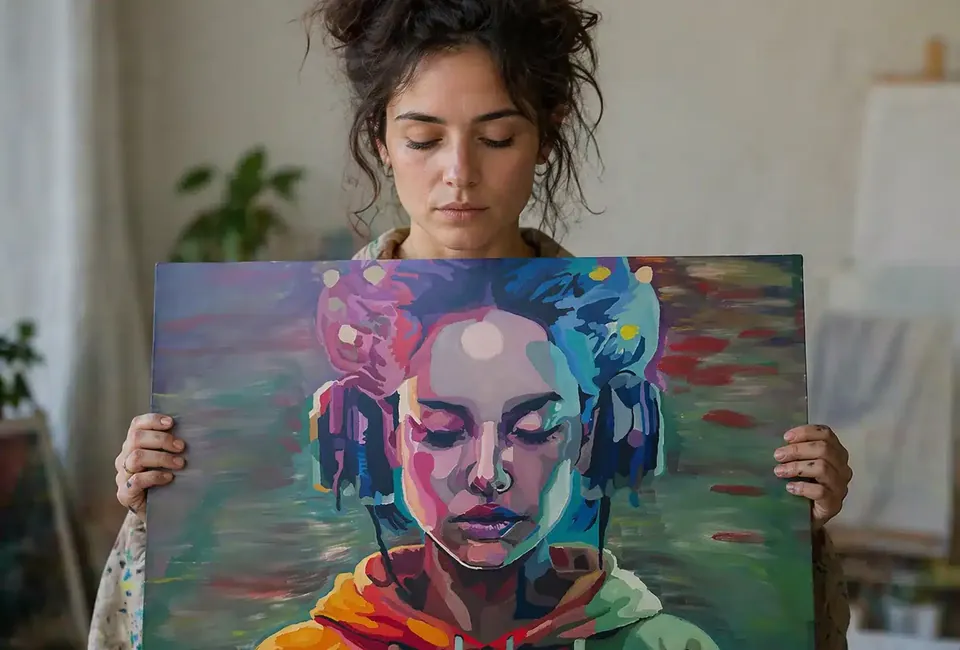
I am not a therapist. I do not write from clinical knowledge about PTSD. I write from the experience of painting with a body that holds a lot of noise. And there is a difference between art therapy, which has a therapist, a framework, and a goal, and sitting alone in the studio at an hour past midnight, letting the oil move. Both can be true. But the one I know is the second.
What Painting Gives That Words Do Not
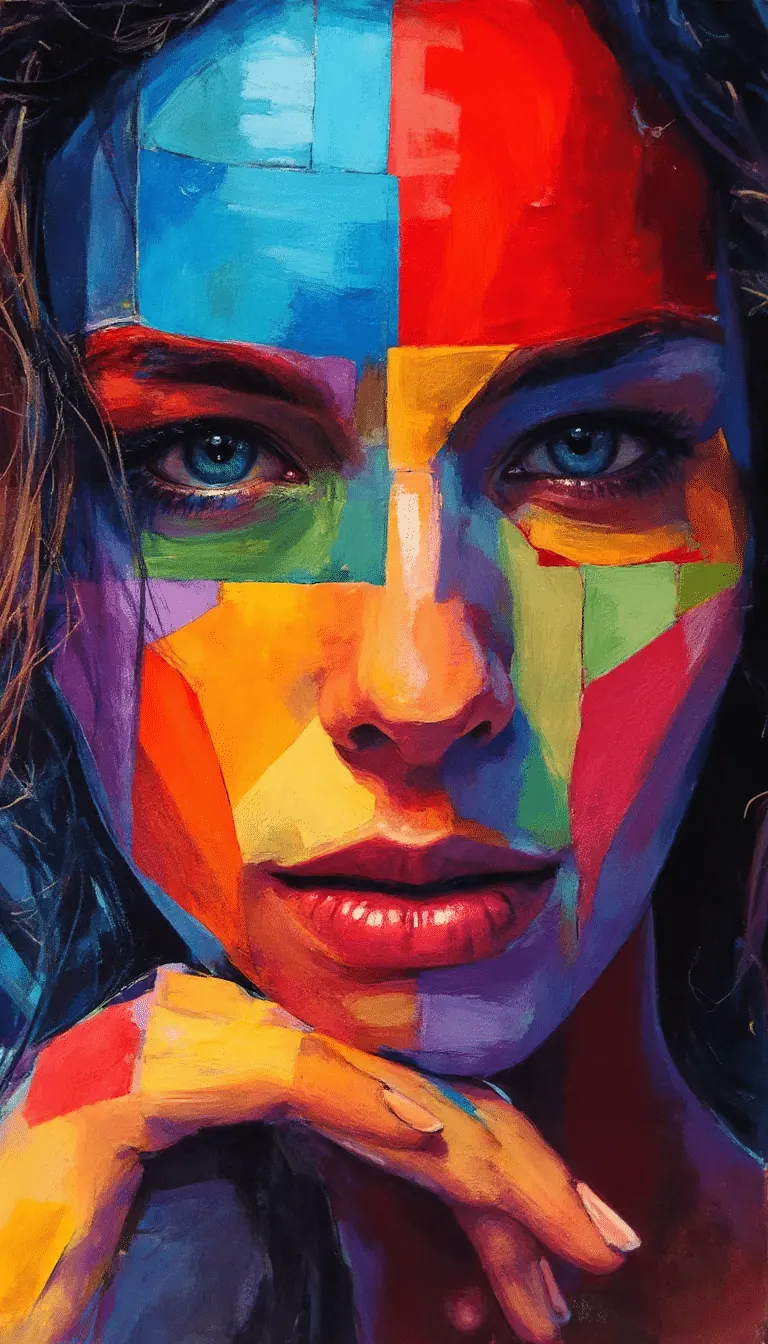
Trauma cuts off the story. You try to tell what happened and you get stuck, because words do not arrange it right. They are too precise, or not precise enough. Color does not try to be precise. It feels right or not right. A warm palette on canvas can touch something a whole sentence fails to describe. When I paint a portrait of myself, of a figure that speaks to me, I do not tell. I recognize.
Portrait Painting as a Reflection of Inner Struggle
And I Am Beside Myself, the portrait of Assi Dayan, was also born from a similar place. A person who holds at the same time things that seem contradictory. Son of a leader. A sad creator. Someone who was most himself when he was most vulnerable. I paint people who hold contradictions, because that is what I know.
Frequently Asked Questions
How does painting help cope with the symptoms of PTSD? Painting, and especially working with oil, requires concentration and full presence in the moment. The physical act of applying paint and the aesthetic decisions help calm the nervous system and shift the focus from the traumatic memory to the tangible work on the canvas.
What is the difference between art therapy and independent painting in a studio? Art therapy is carried out with a certified therapist and in a clinical framework. Independent painting in a studio is a process of unguided self expression. For me, the studio is a space of freedom where there is no right or wrong, only an attempt to give form and color to inner feelings.
Do you need prior painting experience to benefit emotionally? Not at all. The real value of painting as a coping tool is not in the final result or the technique, but in the process itself. The ability to bring out emotion without using words is powerful for anyone, regardless of skill level.
Explore the works in my gallery, or reach out.
Related collections